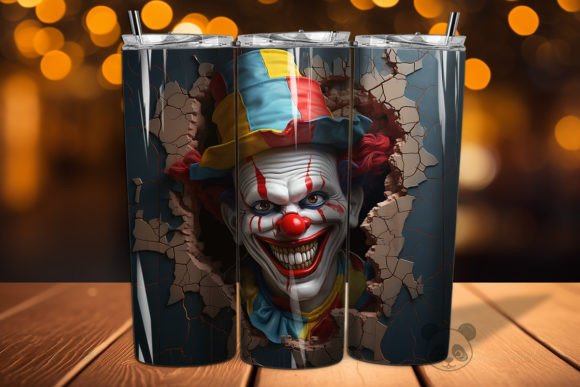
Mastering the 3D Shark Cracked Hole Tumbler Wrap: A Guide to Modern Sublimation Design
In the rapidly evolving world of custom merchandise and DIY crafting, sublimation printing has emerged as a dominant force. Among the myriad of designs available to creators, the 3D Shark Cracked Hole Tumbler Wrap stands out as a particularly striking example of how digital art can transform everyday objects into statement pieces. This design, often referred to as "Wrap 9" in specific collections, combines the visceral appeal of marine life with the trendy aesthetic of a "cracked hole" or broken glass effect. For entrepreneurs, hobbyists, and designers alike, understanding the nuances of this specific digital asset is key to producing high-quality, professional-grade tumblers that captivate customers.
The Anatomy of a High-Impact Sublimation Design
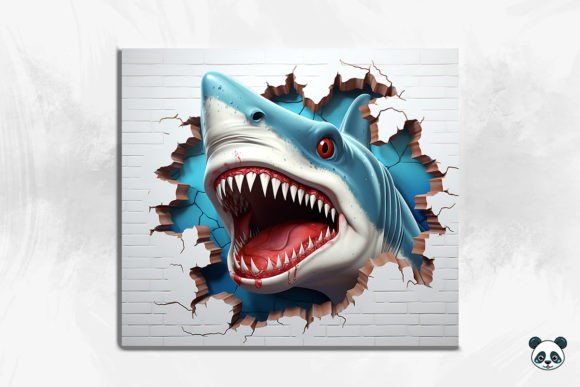
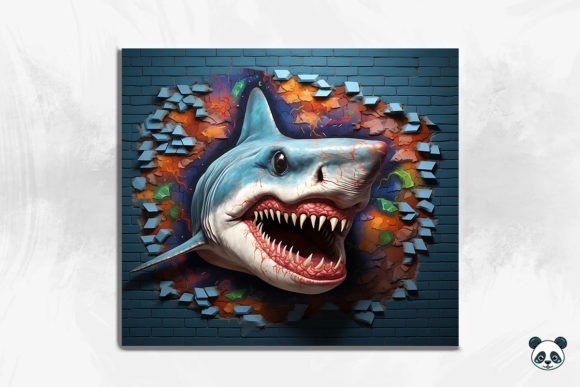
To truly appreciate the value of a 3D Shark Cracked Hole Tumbler Wrap, one must first understand the components that make it effective. At its core, this is not merely a picture of a shark; it is a complex composition designed specifically for the curvature of a 20 oz skinny tumbler. The design typically features a hyper-realistic or watercolor-style shark appearing to burst through the surface of the cup, creating an illusion of depth known as a 3D effect.
The "cracked hole" element is a crucial stylistic choice. In the realm of graphic design for physical products, breaking the fourth wall—making the image look like it is interacting with the physical object—adds a layer of intrigue. When applied to a tumbler, the cracks radiate outward from the shark, suggesting that the animal is swimming inside the vessel or breaking out from within. This technique leverages human psychology; our eyes are naturally drawn to anomalies and depth, making these tumblers instant conversation starters at coffee shops, offices, or beaches.
Why the 20 Oz Skinny Tumbler?
The popularity of this design is inextricably linked to the hardware it adorns: the 20 oz skinny tumbler. This specific size and shape have become the industry standard for sublimation enthusiasts. Why? Because its slender profile offers a perfect canvas for vertical or wrapping designs without the distortion often found on wider mugs or bottles. The dimensions of the Shark seamless pattern or wrap are calculated precisely to fit this form factor. A standard file for this purpose, such as the one described in digital marketplaces, usually measures approximately 9.3 inches by 8.2 inches. This sizing ensures that when printed and wrapped around the cylindrical surface, the image meets seamlessly without unsightly gaps or overlapping distortions.
The Technical Backbone: Resolution and File Formats
For those new to the craft, the difference between a amateur-looking product and a professional one often comes down to technical specifications. When purchasing an Instant Digital Download PNG for sublimation, two factors are non-negotiable: file format and resolution.
- PNG Format: The Portable Network Graphics (PNG) format is preferred over JPEG for sublimation because it supports lossless compression. This means the image retains its sharpness even after being resized or manipulated in design software. Furthermore, high-quality PNGs often support transparency, allowing designers to layer the shark graphic over different background colors or patterns if the specific wrap design allows for it.
- 300 DPI: Dots Per Inch (DPI) is the measure of print resolution. A file saved at 72 DPI (standard for web browsing) will appear pixelated and blurry when printed on a physical object. The 3D Shark Cracked Hole wraps intended for professional use are rendered at 300 DPI. This high density ensures that the fine details of the shark's scales, the watercolor textures, and the sharp edges of the "cracks" remain crisp and clear after the heat press process.
It is a common misunderstanding among beginners that they can simply take an image from Google Images and print it. This approach almost invariably leads to disappointment. The specialized files provided in digital shops are pre-sized and pre-rendered specifically for the thermal dynamics of sublimation printing, where ink turns into gas and bonds with polymer coatings.
From Digital File to Physical Product: The Workflow
Owning the digital file is only the first step in the creative journey. The transition from a Shark tumbler wrap PNG on a computer screen to a finished product involves a precise workflow. This process highlights the intersection of creativity and technology in modern small business operations.
- Preparation: After the instant download, the user extracts the ZIP file to access the high-resolution PNG. It is vital to verify the dimensions (approx. 9.3 x 8.2 inches) in image editing software like Photoshop, Canva, or Illustrator.
- Mirroring: A critical step often overlooked by novices is mirroring the image. Because sublimation transfers the image onto the object, the design must be printed in reverse (horizontally flipped). If this step is skipped, any text or directional elements in the shark design will appear backward on the final tumbler.
- Printing: The image is printed onto special sublimation paper using sublimation ink. Regular inkjet or laser printers cannot be used for this process as they do not contain the necessary dye-sublimation chemicals.
- Pressing: The printed paper is wrapped tightly around the blank 20 oz skinny tumbler (which must have a polymer coating) and secured with heat-resistant tape. It is then placed in a convection oven or a specialized tumbler heat press. The heat (usually around 380°F - 400°F) and pressure cause the ink to sublimate, permanently embedding the shark design into the metal.
The Role of Seamless Patterns in Modern Design
Beyond the single focal image of the shark, many of these downloads include or utilize seamless patterns. A seamless pattern is a graphical element that can be tiled infinitely without visible borders or interruptions. In the context of tumbler wraps, a Shark 3D seamless pattern might be used as a background texture, adding depth behind the main "cracked hole" visual. This technique prevents the design from looking flat. By incorporating watercolor washes or oceanic gradients that loop perfectly, designers create an immersive environment for the shark, enhancing the 3D illusion.
This attention to detail reflects a broader trend in the creator economy: the demand for "ready-to-press" assets that save time while maintaining high artistic standards. For a business owner selling custom drinkware, time is money. Being able to purchase a pre-made, perfectly sized, 300 DPI file allows them to focus on production, marketing, and customer service rather than spending hours illustrating a shark from scratch.
Clarifying Common Misconceptions
As with any digital product, there are assumptions that need to be addressed to ensure customer satisfaction. First and foremost, it is essential to understand that purchasing a 3D Shark Cracked Hole Tumbler Wrap is a transaction for intellectual property and digital data, not a physical good. No tumbler, no paper, and no ink are included in the download. The buyer receives a ZIP file containing the digital artwork.
Secondly, there is often confusion regarding "sizing." While the file is provided at specific dimensions (9.3 x 8.2 inches), the nature of sublimation means that slight adjustments may be needed depending on the specific brand of the tumbler blank. Different manufacturers may have slightly varying circumferences. However, the provided dimensions are the industry standard for "skinny" tumblers, offering a near-universal fit for the most popular blanks on the market.
Finally, the term "3D" in this context refers to the visual style, not a physical texture. The tumbler will remain smooth to the touch; the depth is purely optical, created through shading, perspective, and the cracked glass overlay. Managing these expectations is part of the educational aspect of buying digital design assets.
The Broader Impact on Creativity and Commerce
The availability of niche designs like the Shark watercolor or Shark background wraps signifies a shift in how we approach personalization. We have moved away from mass-produced, identical goods toward hyper-personalized items that reflect individual interests—whether that be a love for marine biology, a fascination with ocean predators, or simply an appreciation for edgy, textured art styles.
For educators and parents, these designs offer a gateway to discuss marine conservation. A tumbler featuring a majestic shark can spark conversations about ocean ecosystems. For businesses, it represents a low-barrier entry into e-commerce. With the right digital files and equipment, a home crafter can launch a boutique brand specializing in ocean-themed drinkware, competing effectively with larger retailers by offering unique, high-quality customizations.
In conclusion, the 3D Shark Cracked Hole Tumbler Wrap is more than just a pretty picture; it is a sophisticated digital tool designed for a specific technological process. It embodies the convergence of artistic vision and technical precision. Whether you are a seasoned sublimation expert looking to expand your catalog with a trending shark motif, or a beginner eager to learn the ropes of digital printing, understanding the intricacies of these files—from their 300 DPI resolution to their seamless patterning—is the first step toward creating stunning, durable, and memorable products. As the demand for personalized goods continues to rise, mastering these digital assets will remain a valuable skill in the modern creative landscape.